Trivia Isn’t Just a Game — It’s a Fun Way to Learn
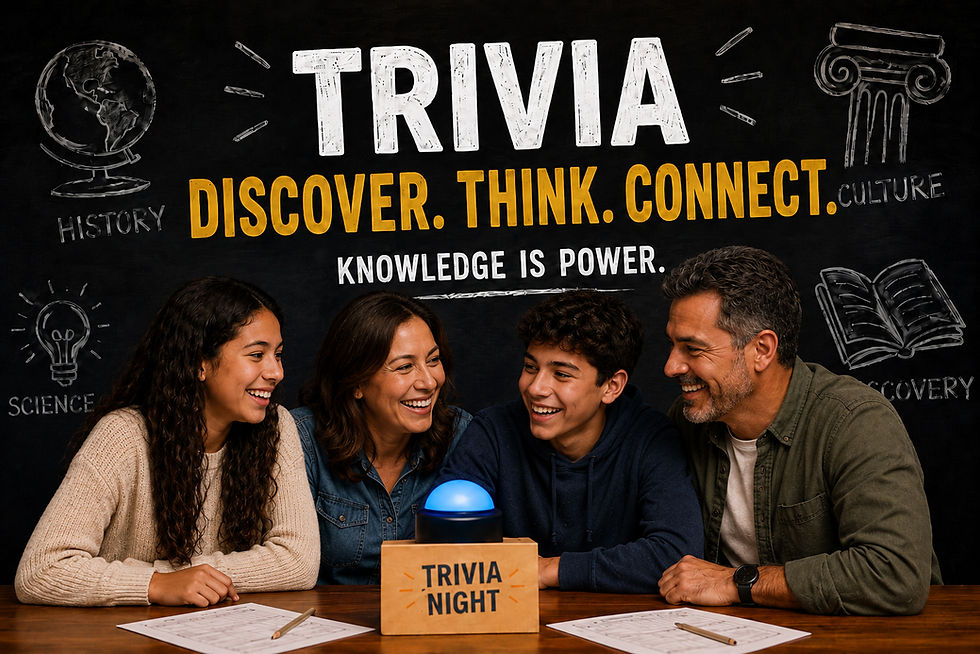
When most people think of trivia night, they think of laughter, friendly competition, team names, food, drinks, and maybe a little bragging rights. And yes, trivia is absolutely all of those things. But it is also something much bigger: trivia is a learning experience.
For younger generations especially, trivia can be a fun and memorable way to discover pieces of history, pop culture, science, geography, music, sports, and everyday knowledge they may not have learned in school — or may not have paid much attention to at the time.
Let’s be honest: not every student falls in love with history class. Dates, names, wars, inventions, presidents, movements, and major world events can sometimes feel overwhelming or disconnected from real life. But when those same facts are turned into a fun question during a trivia game, something changes. Suddenly, learning feels less like homework and more like a challenge.
A question about the first moon landing, the Civil Rights Movement, the fall of the Berlin Wall, the invention of the internet, or even the origin of a famous song can spark curiosity. Someone may hear the answer and think, “Wait, I never knew that!” That little moment is where learning begins.
Trivia has a way of making information stick because it gives people a reason to care. Instead of simply memorizing facts, players connect those facts to a moment: the team discussion, the funny wrong guess, the surprise answer, or the excitement of getting it right. That experience can make the information much easier to remember.
It also encourages conversation between generations. A younger player might not know much about the 1970s, 1980s, or 1990s, while someone older at the table may remember those decades firsthand. On the other hand, younger players may shine when it comes to newer music, social media, technology, or current trends. Trivia gives everyone a chance to teach and learn from each other.
History, especially, becomes more approachable through trivia. Not every historical question has to feel heavy or intimidating. A well-written trivia question can introduce players to fascinating moments they may have missed, such as unusual inventions, forgotten firsts, surprising presidential facts, famous speeches, cultural milestones, or the stories behind everyday things we still use today.
That is one of the best things about trivia: it sneaks learning into the fun.
For younger generations, trivia can help build curiosity, confidence, memory, teamwork, and critical thinking. Players learn how to reason through clues, eliminate wrong answers, listen to teammates, and take educated guesses. Even when they get an answer wrong, they often walk away remembering the correct one.
And sometimes, one trivia question can lead someone to look something up later, watch a documentary, read about a historical event, or ask more questions. That is a win.
At Competitive Edge Trivia, we believe trivia should be entertaining, challenging, and meaningful. A great trivia night brings people together, makes them laugh, and sends them home knowing something they did not know before.
Because trivia is not just about who has the most random facts stored away. It is about discovery. It is about connection. It is about learning without even realizing you are learning.
And for the younger generation, that may be exactly the kind of learning that sticks.



Comments